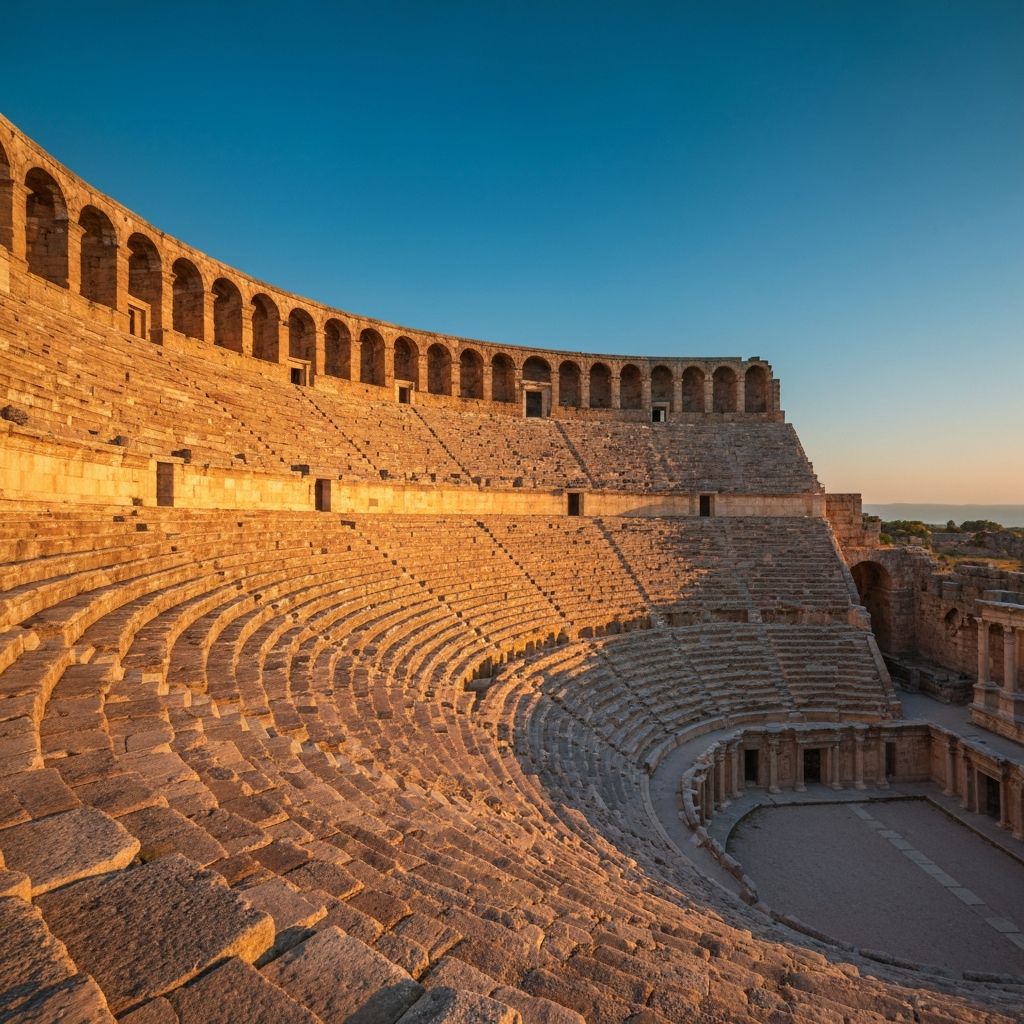
The Aspendos Amphitheater
A Masterpiece of Roman Engineering and the Best-Preserved Ancient Theatre in the World
An Unrivaled Architectural Marvel
The Aspendos Theatre stands as the most complete example of Roman theatre architecture in existence. Built during the reign of Emperor Marcus Aurelius between 161 and 180 AD, this magnificent structure has survived nearly two millennia with its stage building, auditorium, and decorative elements remarkably intact.
The theatre was designed by the Greek architect Zenon, a native of Aspendos. According to inscriptions, it was dedicated to the gods and the Imperial family. The exceptional state of preservation can be attributed to its continuous use throughout history, including as a Seljuk caravanserai in the 13th century.
Today, the Aspendos Theatre continues to serve its original purpose, hosting the annual Aspendos International Opera and Ballet Festival, where modern audiences can experience the same acoustic perfection that entertained ancient Romans.
Architecture and Construction
Understanding the genius of Roman engineering that created this enduring masterpiece.
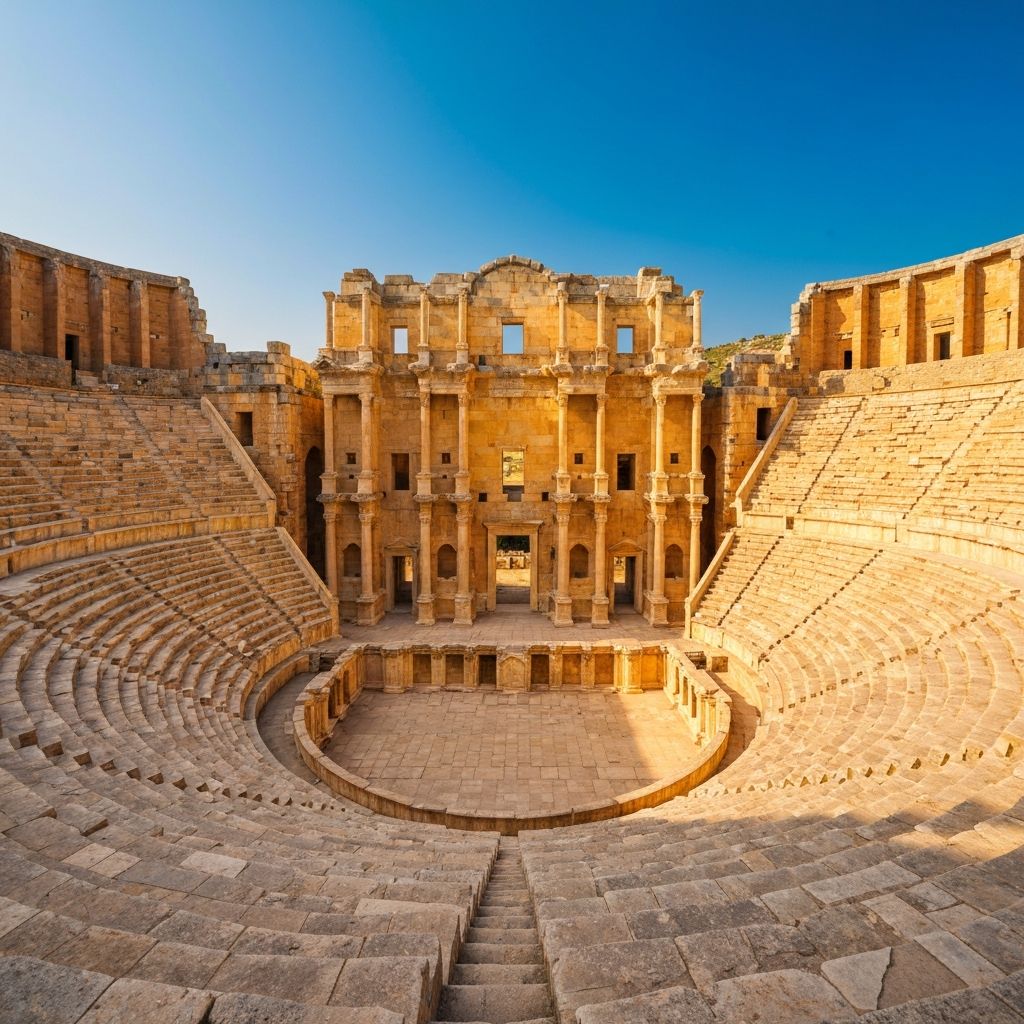
Design and Capacity
The theatre follows the classic Roman design with a semicircular cavea (seating area) divided into two sections by a horizontal walkway called the diazoma. The lower section contains 20 rows of seats, while the upper section has 21 rows, providing a total capacity of approximately 15,000 to 20,000 spectators.
The Stage Building (Scaenae Frons)
The two-story stage building rises to the full height of the cavea, featuring a richly decorated facade with columns, niches, and pediments. Five doorways allowed actors to enter the stage, with the central door (porta regia) being the largest and most ornate.
Vaulted Galleries
Unlike Greek theatres built into hillsides, the Aspendos Theatre was constructed with massive vaulted substructures that supported the seating. These barrel-vaulted corridors provided access for spectators and remain structurally sound today.
Acoustics and Engineering Brilliance
The acoustic properties of the Aspendos Theatre are legendary. The design allows even a whisper from the stage to be clearly heard in the uppermost rows, a feat that modern engineers still study and admire.
The "Coin Test"
Visitors often test the acoustics by dropping a coin on the stage - the sound can be heard clearly from any seat in the theatre.
Sound Reflection
The stage building and cavea work together to reflect and amplify sound, eliminating the need for any artificial amplification.
Aspendos Theatre Through Time
Its Role in Ancient Aspendos
In ancient times, the theatre served as the cultural heart of Aspendos. It hosted dramatic performances, musical competitions, and political assemblies. The theatre was an essential part of civic life, reflecting the importance of public entertainment in Roman society.
Seljuk Period
During the Seljuk period in the 13th century, the theatre was converted into a caravanserai (roadside inn). The Seljuk sultan Alaeddin Keykubad I ordered repairs to the structure, which inadvertently helped preserve it. Evidence of Seljuk modifications can still be seen in parts of the stage building.
Modern Rediscovery
European travelers began documenting the theatre in the 19th century, bringing it to international attention. Archaeological studies and conservation efforts have continued ever since, ensuring the theatre's preservation for future generations.
Present Day
Today, the Aspendos Theatre is both a major tourist attraction and a functioning performance venue. The Aspendos International Opera and Ballet Festival, held annually, brings world-class performers to this ancient stage, connecting modern audiences with the theatre's original purpose.
Visiting the Aspendos Amphitheater
Tickets can be purchased at the entrance gate. The Turkey Museum Pass is valid here and offers excellent value if you plan to visit multiple archaeological sites.
For festival performances, tickets should be purchased in advance through official channels. Performance tickets are separate from site entry tickets.
Credit cards are accepted at the ticket office. Student discounts are available with valid international student ID.
Best time to visit: Early morning or late afternoon for better lighting and fewer crowds. The golden hour offers spectacular photography opportunities.
Climb to the top: The view from the uppermost rows is breathtaking. Test the acoustics by having someone speak from the stage.
Wear comfortable shoes:You'll be climbing ancient stone steps. In summer, bring water and sun protection.
Allow adequate time: Plan for at least 1-2 hours to fully explore the theatre and appreciate its details.
FAQs About the Aspendos Amphitheater
Continue Exploring Aspendos
The theatre is just one part of this remarkable ancient city. Discover more about Aspendos and the surrounding region.