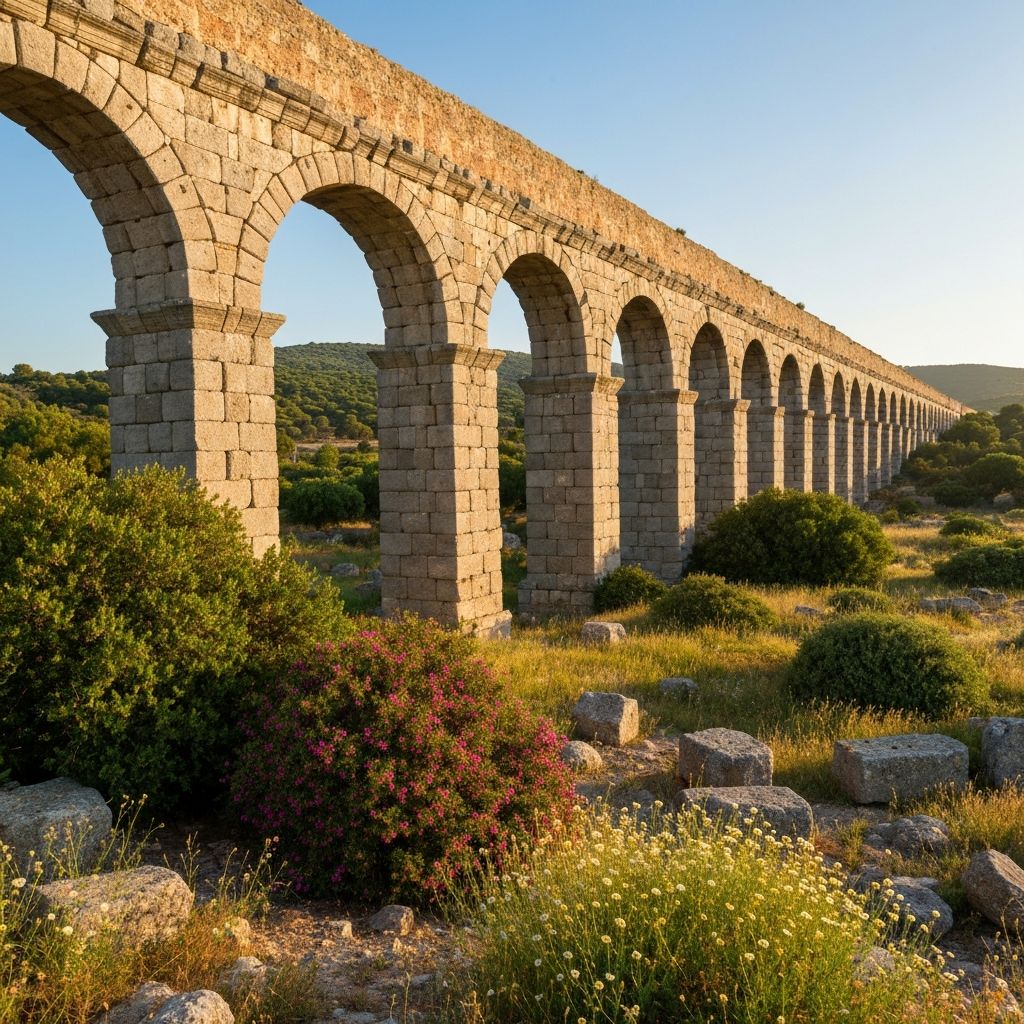
The Aspendos Aqueduct
A Lifeline to an Ancient Civilization: Discovering Roman Hydraulic Engineering
Unveiling the Aspendos Aqueduct
The Aspendos Aqueduct represents one of the most sophisticated water supply systems of the ancient world. Stretching approximately 15 kilometers from the mountains to the north, this engineering marvel brought fresh water to the prosperous city of Aspendos during the Roman period.
What makes this aqueduct particularly remarkable is its innovative use of the inverted siphon system - a technique that allowed water to cross valleys by utilizing water pressure rather than relying solely on gravity.
While less famous than the theatre, the aqueduct is equally important for understanding how Roman engineers solved complex infrastructure challenges and sustained urban life in the ancient Mediterranean.
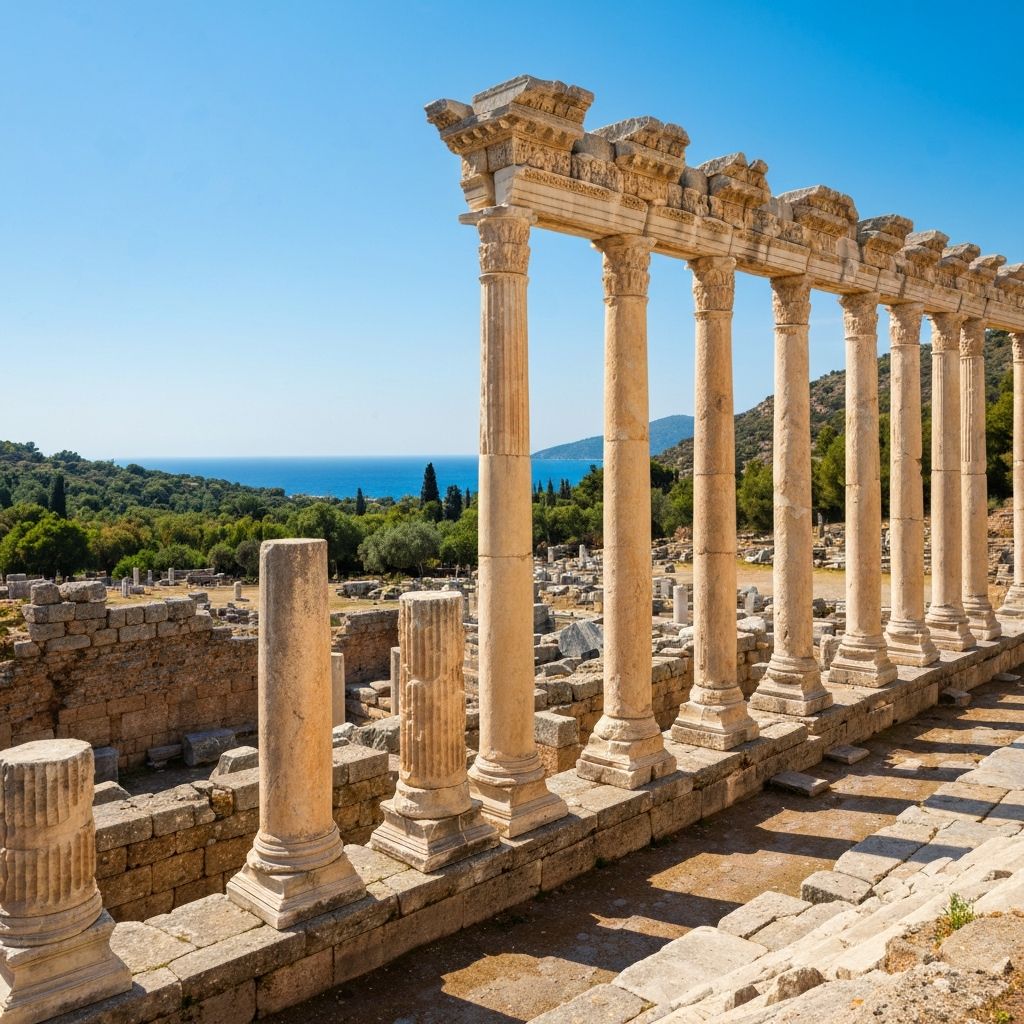
Engineering Marvels of the Aqueduct
The innovative techniques that made this water supply system possible.
The aqueduct collected water from springs in the northern mountains. For most of its length, water flowed through channels using simple gravity - the natural downward slope carrying water toward the city.
However, the terrain between the source and Aspendos included valleys that were lower than the city itself. This is where Roman engineering ingenuity came into play with the inverted siphon system.
The inverted siphon worked by channeling water down into a valley through sealed pipes, then using the pressure created by the water's weight to push it back up the other side.
Two massive pressure towers (hydraulic towers) were built to regulate this system. These towers, still partially standing today, reduced the pressure on the pipes and allowed maintenance access.
The towers stand approximately 30 meters high, demonstrating the scale of Roman engineering ambition in this relatively remote city.
Understanding the Inverted Siphon
Water Descends
Water flows down from the source through channels, building pressure as it descends into the valley.
Pressure Towers
Tall towers at the valley bottom regulate pressure and allow trapped air to escape, preventing pipe damage.
Water Rises
The pressure pushes water up the opposite slope, delivering it to the city at a height nearly equal to the source.
Historical Context and Legacy
Construction and Roman Rule
The aqueduct was likely constructed during the 2nd century AD, the same period that saw the building of the famous theatre. This was the height of Roman prosperity in Aspendos, when the city could afford such ambitious infrastructure projects.
The aqueduct supplied water to public fountains, baths, and the nymphaeum (monumental fountain), supporting a population that may have reached 15,000 to 20,000 people.
Importance in Ancient City Life
Fresh water was essential for Roman urban life. The aqueduct enabled public baths, which were central to Roman social life and hygiene. It also supplied water for domestic use, crafts, and possibly irrigation.
The presence of such sophisticated infrastructure demonstrated Aspendos's wealth and importance within the Roman provincial system.
Decline and Modern Preservation
As the Roman Empire declined and Aspendos lost population, the aqueduct fell into disuse. Without maintenance, sections collapsed over the centuries. Today, only portions remain standing, primarily the impressive pressure towers.
Modern preservation efforts focus on stabilizing the remaining structures and educating visitors about this remarkable feat of ancient engineering.
Experiencing the Aqueduct Today
Pressure Towers: The most impressive remains are the two hydraulic towers north of the ancient city. These massive stone structures rise dramatically from the landscape.
Channel Sections:Some portions of the water channel can still be traced across the terrain, giving a sense of the system's scale.
Nymphaeum: In the ancient city itself, the ornate fountain building that received water from the aqueduct can still be seen.
Best light:Early morning or late afternoon provides dramatic shadows that emphasize the towers' height and texture.
Wide angles: Bring a wide-angle lens to capture the full scale of the pressure towers against the landscape.
Context shots: Include the surrounding terrain to show how the aqueduct solved the challenge of crossing valleys.
Details: Close-ups of the stonework reveal the craftsmanship of Roman builders nearly 2,000 years ago.
Note: The aqueduct ruins are located outside the main archaeological site. Visiting them requires a short drive or walk north of the theatre. Consider combining your visit with exploration of the main ruins.
Explore More of Aspendos
The aqueduct is just one part of this remarkable ancient city. Discover the famous theatre and plan your complete visit.